


4 Pet-Friendly Remodeling Ideas for Cleaner, Easier Living

A pet-friendly remodel should do more than withstand muddy paws; it should make daily routines easier for everyone at home. Four practical pet-friendly remodeling ideas are built-in feeding stations, convenient wash areas, durable, easy-to-clean finishes, and designated spaces where pets can rest or stay safely out of the way. Together, these features can help organize supplies and contain messes without making your home feel like a kennel.
It’s frustrating when feeding, cleanup, and pet gear spill into the busiest parts of the house. Thoughtful planning can tuck bowls out of the way, simplify muddy-paw cleanup, and help floors and walls handle everyday wear. Consider how these features could fit into your kitchen, bathroom, laundry area, or another living space, based on your pets and household routines. The right combination can make your home feel cleaner and more comfortable while keeping your pet’s needs in view.
Table of Contents
1. Built-in feeding stations and pet-supply storage
Among practical pet-friendly remodeling ideas, a kitchen drawer can become a tucked-away feeding station for food and water bowls. Pull it out at mealtime, then slide it back to clear the floor and keep the kitchen route open. An open nook at the end of an island is another option, especially for a pet that prefers a consistent spot. Keep bowls accessible but away from cooking areas and busy walkways.
Plan storage beside the station so food, treats, leashes, and toys each have a place. These pet-friendly remodeling ideas work best when daily supplies are close at hand and bags don’t clutter the floor. Keep cleaning and laundry products securely stored in locked cabinets. If a dog and cat share your home, place the cat’s food where the dog can’t reach it; eating too much cat food can make a dog sick.
A built-in resting nook can make use of space beneath a kitchen island or in a quiet corner. Fit the bed to your pet, with enough room to enter, turn, and settle comfortably. A fold-out bed in a wall or shelving unit can free up floor space when it’s not in use. Keep a favorite blanket nearby to make the nook feel familiar.
Building codes, HOA rules, and rental terms can affect pet doors, fences, and remodeling changes. Requirements vary with the property and the planned work, so account for them before altering a structure or adding an exterior opening.
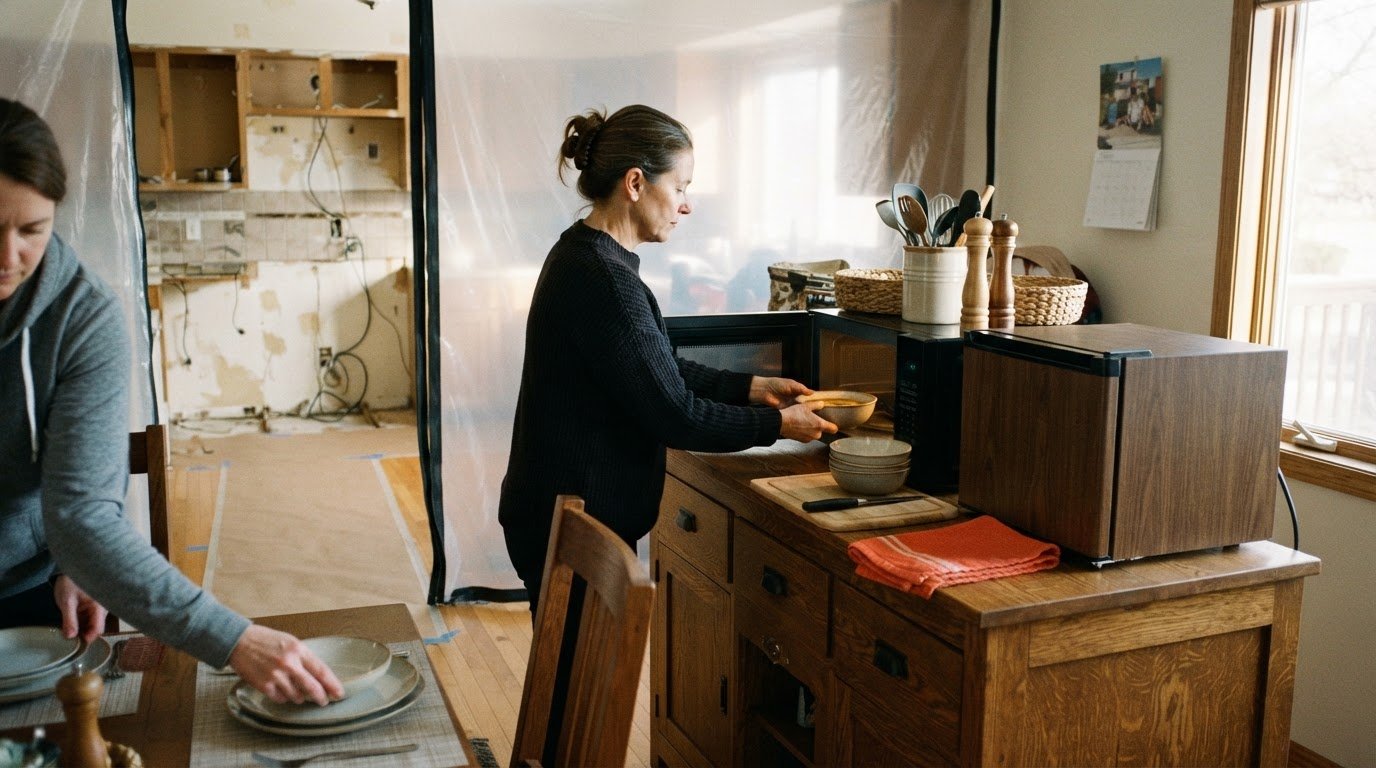
During construction, set aside a quiet room for dogs and cats, away from dust, noise, tools, and work areas. Keep hazardous materials secured in locked cabinets, and place familiar bedding and toys in the room. A closed door helps keep pets separate from active work.
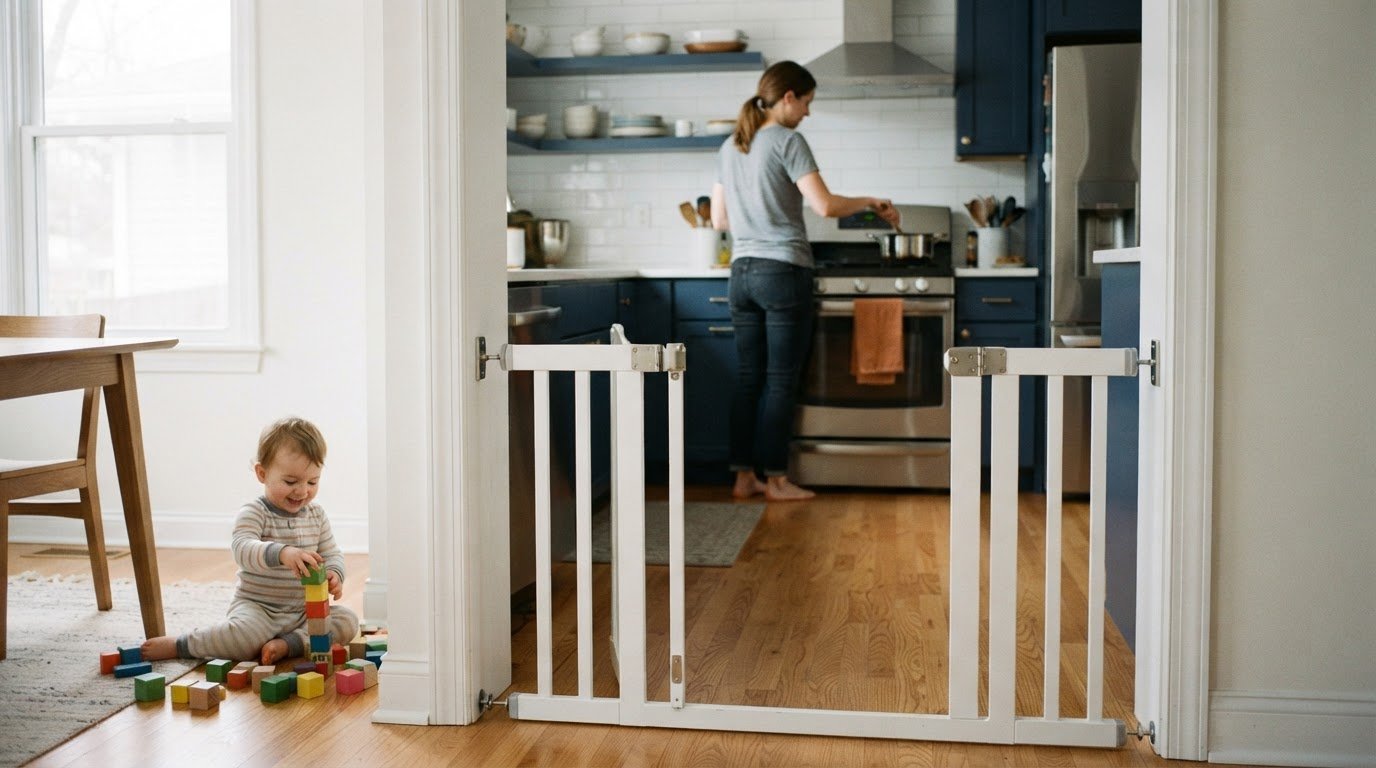
Pet gates can restrict kitchen access during cooking, while a pet door can connect an indoor station with a fenced yard. For a small or older companion, a ramp can make a favorite resting spot easier to reach. Plan around your pet’s usual routes and your household’s daily traffic.
2. Dog washing stations in bathrooms or laundry areas
A tiled wash area near an entrance gives muddy dogs a place to rinse before coming inside. A small shower stall with a handheld hose can fit in a bathroom or laundry room. Include a floor drain, an easy-to-reach water control, and a nearby towel hook. These details simplify cleanup and help keep muddy paws away from kitchen floors and living-room furniture.
In a mudroom, combine a wash station with a durable tile landing pad, leash hooks, and towel storage. A raised edge around the wash area can help contain splashes, while a nearby bench gives you a place to manage a leash or dry your pet. Choose easy-to-clean surfaces around the washing zone. Luxury vinyl can suit adjacent floor space, while tile works well on the wash area’s floor and walls.
A laundry room can be a practical bathing spot, with clean towels close at hand. A handheld sprayer can rinse muddy paws or help wash a small dog. For a larger dog, a tiled shower stall offers more room than a deep utility sink. If a dedicated station won’t fit, a deep sink beside a durable tile landing pad provides a compact alternative.
There’s no single typical cost for a pet-friendly remodel. The scope depends on the room, plumbing changes, drainage, surfaces, and whether the plan adds a full shower or adapts an existing sink. A utility sink and tile landing pad can make cleanup the focus without creating a separate bathing stall.
In a small home or apartment, use an existing bathroom or laundry corner rather than adding a new room. A hand sprayer, towel hooks, and a washable landing area can make a compact routine work. For a planned wash zone, bathroom remodeling can bring the shower, drainage, and storage into one coordinated layout.
3. Durable, easy-to-clean flooring and finishes
Flooring takes daily wear from claws, spills, litter, and muddy paws. Tile, luxury vinyl plank, and engineered hardwood are resilient options for homes with pets. Luxury vinyl plank suits high-traffic paths, while porcelain tile works well near water bowls or an island feeding area. Choose a surface to suit each room’s use and your preferred cleaning routine.
Waterproof laminate can be washed after muddy paw prints or pet accidents. Removable carpet tiles offer another practical option: clean or replace an individual tile when it’s stained or damaged. Higher-quality engineered hardwood with a thicker wear layer may be refinished, while thinner wood veneers may not withstand refinishing after scratches. Marble and limestone can be more vulnerable to scratches, stains, and wear.
Finish the details, too. Solid wood baseboards resist moisture damage better than medium-density fiberboard, which can swell when wet. Scrubbable satin or eggshell paint suits hallway walls that collect marks at tail height. For upholstery, tightly woven performance fabric can resist claws and wipe clean with a damp cloth. Smooth, sealed countertops and cabinets make spills easier to remove.
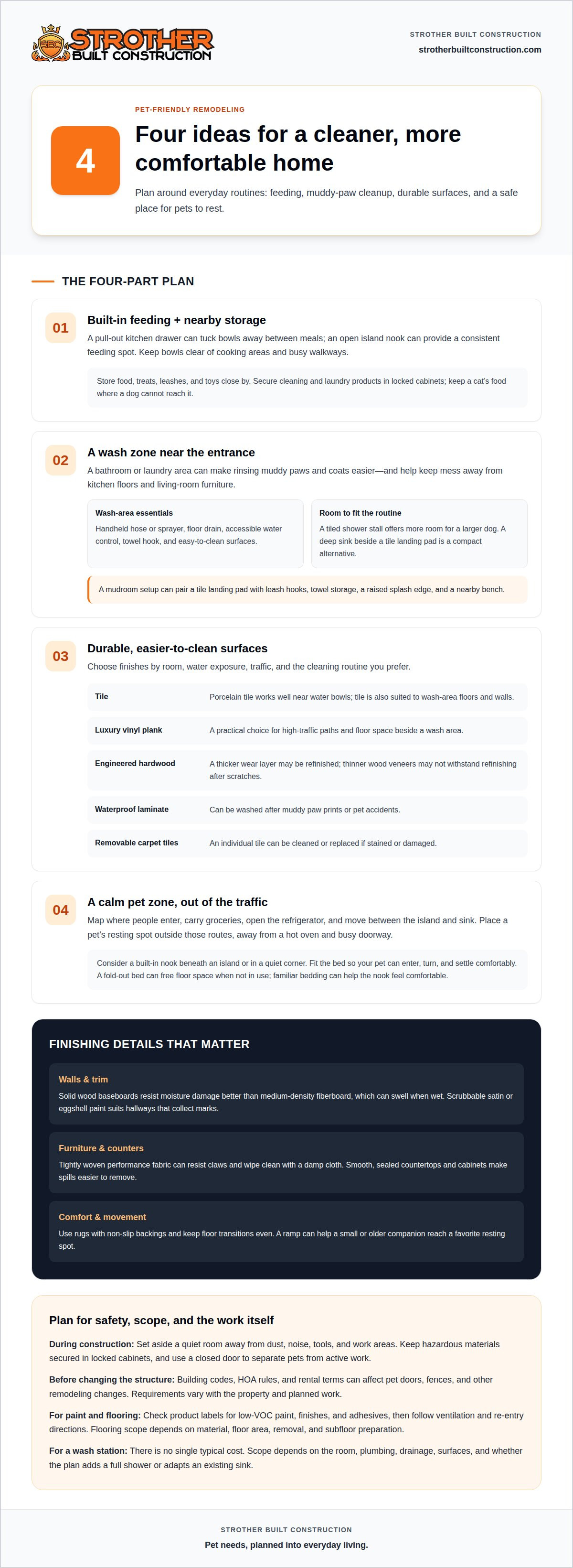
Flooring costs depend on the project and are provided after a quote request. Material, floor area, removal, and subfloor preparation all shape the scope. For traction, choose rugs with non-slip backings and keep floor transitions even so pets can move comfortably between rooms. Gates at doorways can help restrict access to areas with hazards.
For hallways, scrubbable satin or eggshell paint is a practical finish. Choose low-VOC paint, finishes, and adhesives by checking product labels, then follow their ventilation and re-entry directions before pets return to the work area. Keep leashes, tools, and supplies out of walking paths while work is underway.
4. Kitchen layouts and designated pet zones
Pet-friendly remodeling ideas work best when the kitchen layout separates pet routines from meal preparation. First, map the household’s usual paths: where people enter, carry groceries, open the refrigerator, and move between the island and sink. Place a dog’s resting space outside those routes, away from a hot oven and busy doorway. This keeps your pet included without turning the kitchen’s central work area into a resting spot.
A lower cabinet can become an enclosed dog nook with a wire mesh or metal framework. Keep the opening clear and large enough for the dog to enter and turn comfortably. Choose a calm location away from dishwasher noise and frequently opened cabinets. A washable mat creates a defined resting surface, while a nearby gate can restrict kitchen access during cooking. These pet-friendly remodeling ideas make your pet’s space part of the room’s plan.
Think beyond the kitchen, too. Depending on your household’s routine, a designated pet zone might use a quiet corner near the kitchen, a bathroom, or a finished basement. Keep the route between resting and outdoor access simple, and avoid placing beds where floor transitions or loose rugs could make movement awkward. A consistent location can help pets settle while people prepare meals or welcome guests.
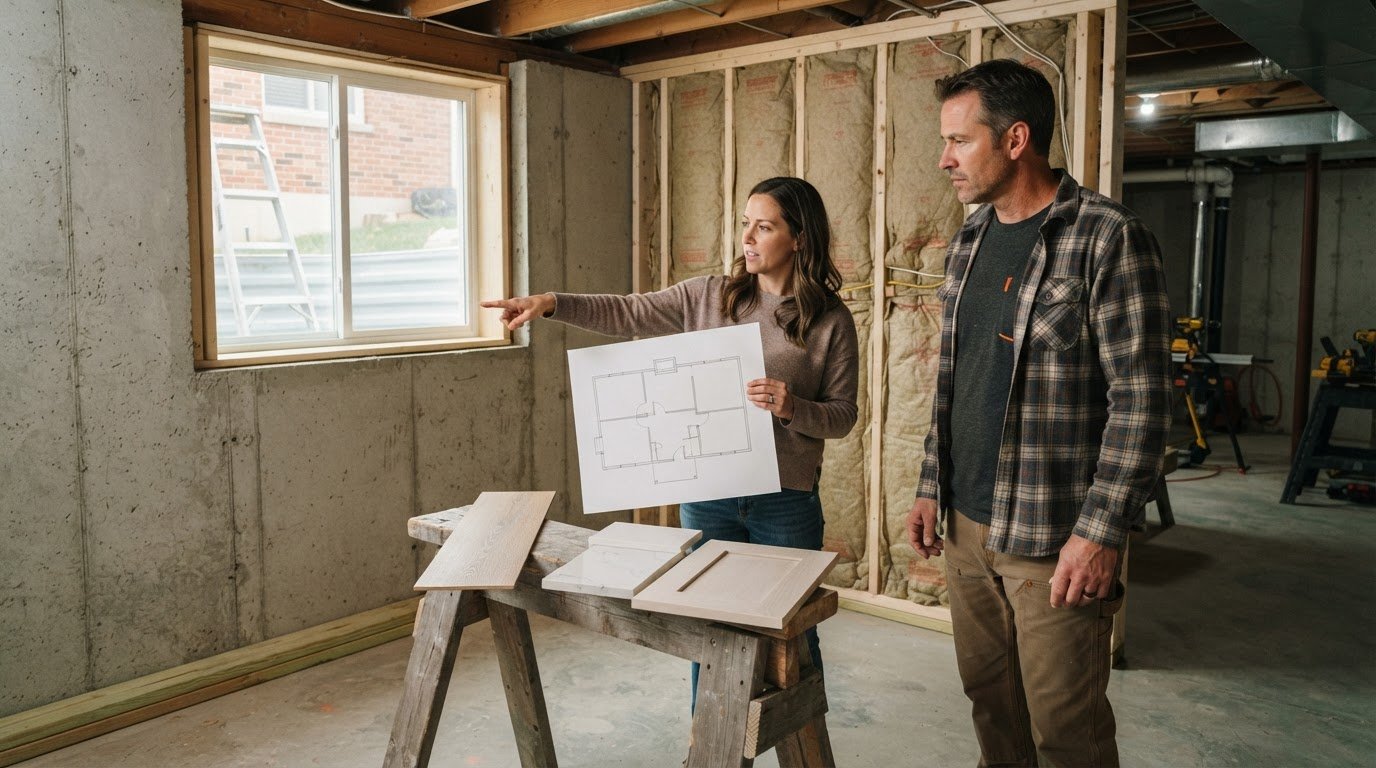
Before construction, note your pet’s size, habits, and preferred resting spots. Measure the cabinet opening and nearby walking space, then plan doors, gates, and storage around those details. A small dog, for example, may use a lower nook, while a larger dog needs a wider, open area. Aim for a clear boundary that still allows comfortable movement for people and pets.
Bring these details into a cohesive plan with kitchen remodeling services, so the pet zone fits the cabinets, work areas, and household traffic.
Strother Built Construction
Strother Built Construction can help turn pet-friendly plans into a coordinated home remodel. Bring together practical needs such as feeding areas, easy-clean finishes, wash spaces, and comfortable pet zones, then shape them around how your household uses each room. Architectural design services can help connect those details across a larger renovation, while kitchen, bathroom, or basement remodeling can make the relevant spaces work better for people and pets alike.
Consider updating a whole room when a pet feature affects its layout, storage, plumbing, or finishes. For a smaller change, focus on the space that creates the most daily friction. Share your priorities and the routines you want your home to support. Contact Strother Built Construction to discuss your remodeling plans.
Plan a Home That Grows With Your Household
Let your pet’s routines guide your next design decision. Notice where your animal naturally settles, how family members move through shared rooms, and which daily tasks feel awkward. Those patterns can help shape a remodel that feels considered rather than added on. The most useful pet-friendly remodeling ideas are the ones that fit your household’s habits and leave room for routines to change over time.
Start by choosing the space that would make the biggest difference to everyday life. A clear priority helps bring the layout, materials, and pet features together in one practical plan. Strother Built Construction can turn those priorities into a thoughtful remodeling project, with design and construction tailored to your home.
Take the next step when you’re ready to discuss your plans: Contact Strother Built Construction today. A well-planned space can make home life more comfortable for you and your pet.
Frequently Asked Questions
What are practical mudroom and entryway ideas for washing and storing pet gear?
Organize the entry as a simple transition from outdoors to living space. In a Des Moines-area home, a washable tray can catch drips from leashes or wet booties, while a labeled bin keeps grooming tools separate from everyday walking gear. Place storage within reach without blocking the door swing. A clear path helps prevent bags and supplies from collecting underfoot.
How can built-in pet beds, feeding stations, and litter-box areas be incorporated into a remodel?
Fit each feature to your pet’s habits and the room’s layout. A cat litter cabinet can include an access cutout, ventilation, and a door that opens for cleaning; keep it away from food preparation areas. For a dog that dislikes enclosed spaces, choose an open resting nook with a clear view. In a Des Moines remodel, these details can be planned alongside the room’s storage and circulation.
How much does a pet-friendly home remodel typically cost, and which upgrades offer the best value?
There is no single typical cost; it depends on the room, plumbing, drainage, surfaces, and whether you add a shower or adapt an existing sink. A deep utility sink with a durable tile landing pad, or a focused update to the area causing the most daily friction, can keep the project smaller.
Which low-VOC paints, finishes, and adhesives are safer for pets during and after remodeling?
Choose low-VOC paints, finishes, and adhesives by checking product labels. Follow the products’ ventilation and re-entry directions before pets return to the work area.
Comments