


Managing Dust During a Home Renovation and How Long It Lasts

Renovation dust can linger long after the tools are put away. Airborne dust settles within 48 hours after work, but residue may keep appearing on surfaces during the first two weeks, and dust trapped in ducts, upholstery, and carpets can resurface for weeks. Managing dust during a home renovation takes more than one final cleanup.
That lingering dust is frustrating, especially when you’re ready to enjoy your newly finished space. A clear plan helps contain dust while work is underway and makes cleanup more thorough. Here, you’ll learn how professionals clean drywall dust, use air-control methods, and protect HVAC systems. You’ll also see how to plan dust control before renovation begins, so the work and the cleanup have a well-organized path from start to finish.
Table of Contents
How professionals clean drywall dust with HEPA vacuums and damp cloths
After drywall sanding, professionals wait a few hours for airborne dust to settle before cleaning. They begin with high surfaces, such as shelves, trim, and window frames, then work down to the floor. This top-to-bottom sequence keeps falling dust off surfaces already cleaned. A HEPA vacuum collects fine debris from ledges, corners, and floors; a clean, damp cloth lifts remaining residue without stirring it into the air. Professionals repeat the cleaning two or three times because one pass can leave a visible film.
Safe cleanup after renovation means removing fine dust without dry sweeping or vigorous dusting. Professionals vacuum floors and reachable surfaces with HEPA equipment, then wipe hard surfaces with damp cloths, changing them as they collect residue. They follow with another vacuum pass along baseboards or near doorways. During the project, the work area is vacuumed twice a week. This routine helps keep dust from building up between sanding sessions.
At the end of each workday, crews collect loose debris and vacuum the work zone. They inspect plastic barriers, taped seams, and door openings for gaps or tears, and check air cleaners for loose connections, clogged filters, or dust around the unit. If dust escapes the contained area, the crew finds the leak and repairs the barrier before dusty work resumes. These checks are part of managing dust during a home renovation, not just final cleanup.
Final cleaning covers the work area again, including floors, trim, and exposed surfaces; contractors commonly allocate about six hours for this stage. Airborne dust can settle after work, while residue may reappear on surfaces later. Dust-control and filtration costs depend on project scope, room layout, and equipment needs, with pricing provided after a quote request. A professional plan for managing dust during a home renovation also accounts for the dust source and surfaces affected.
2. HEPA purifiers, air scrubbers, and negative pressure
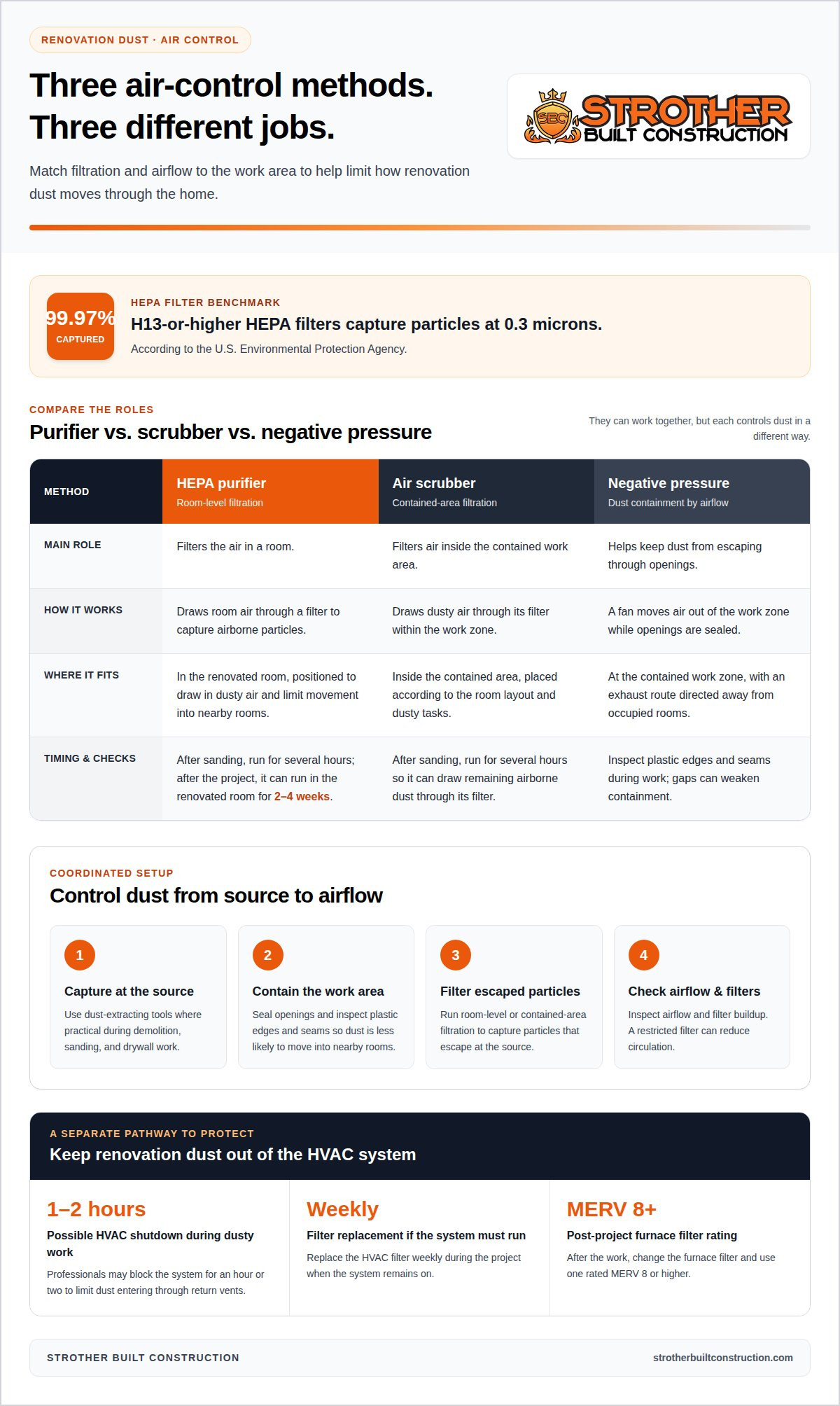
Air control works best when equipment suits the dust source and room layout. A HEPA purifier filters room air, while an air scrubber helps control dust inside a contained work area. According to the U.S. Environmental Protection Agency, an H13-or-higher HEPA filter captures 99.97% of particles at 0.3 microns. Professionals position equipment to draw dusty air through the filter and limit its movement into nearby rooms.
During demolition, sanding, and drywall work, professionals combine source control with room-level filtration. They use dust-extracting tools where practical, contain the work area, and run filtration to capture particles that escape at the source. After sanding stops, an air scrubber or HEPA purifier runs for several hours. This gives the equipment time to draw remaining airborne dust through its filter.
To create negative air pressure, professionals use a fan to move air out of the work zone. They seal openings and arrange airflow to help keep dust within the contained work area. The exhaust path matters: it must direct dusty air away from occupied rooms. Professionals inspect plastic edges and seams during the work, since a gap can weaken containment.
Air scrubbers and purifiers serve different roles. A scrubber filters air in the contained area, while negative pressure helps keep dust from escaping through openings. Professionals place equipment based on the room’s layout, the location of dusty tasks, and available exhaust routes. They also check airflow and inspect filters for buildup, since a restricted filter can reduce circulation.
After the project, a HEPA purifier can run in the renovated room for two to four weeks. The duration helps address lingering dust as it settles and resurfaces from room surfaces. Professionals coordinate this final filtration with cleaning, so the room is cleared before furniture returns. Together, containment, filtered airflow, and careful equipment placement reduce the spread of renovation dust.
3. Protecting HVAC vents and managing air circulation
During dusty work, professionals may block the HVAC system for an hour or two, limiting dust entry through return vents. If the system must run, they replace its filter weekly during the project. Afterward, they change the furnace filter and use one rated MERV 8 or higher. Crews also protect nearby supply and return openings, then uncover them after dusty work ends.
Renovation dust risks depend on the material being disturbed. Silica from tile, stone, or concrete cutting needs specific dust controls; the Occupational Safety and Health Administration’s silica guidance addresses this work. Homes built before 1972 may contain lead dust, which shouldn’t be vented outside. Asbestos-containing materials also require careful handling. Ordinary dust can spread through rooms and settle on belongings, so crews contain the work zone.
Before work starts, professionals move or cover furnishings and electronics near the renovation area. They protect screens, vents, and exposed equipment from settling dust, while keeping covered items outside active work paths. A designated entry mat can catch debris on footwear; crews clean or replace it when dust buildup reduces its usefulness. These steps limit residue carried into adjacent rooms.
For hardwood floors, professionals overlap 6-mil polyethylene plastic by 6 inches and tape the seams. They add 1/2-inch foam-board insulation or protective panels over the plastic, then cover those panels with another sealed plastic layer. Carpeted areas receive two layers of 6-mil plastic. Crews prepare 4-foot-by-4-foot patches to repair punctures and extend entryway plastic 12 inches beyond the doorway on all sides.
Air circulation must support containment, not push dust toward occupied rooms. Weather permitting, professionals can run a window fan continuously during work hours, while keeping the exhaust path away from sensitive areas. They select respiratory protection for the dusty task and material, especially during cutting or demolition. Before reopening the space, crews remove floor coverings carefully and check vents, furnishings, and nearby surfaces for escaped residue.
4. Pre-renovation dust-control planning and responsibilities
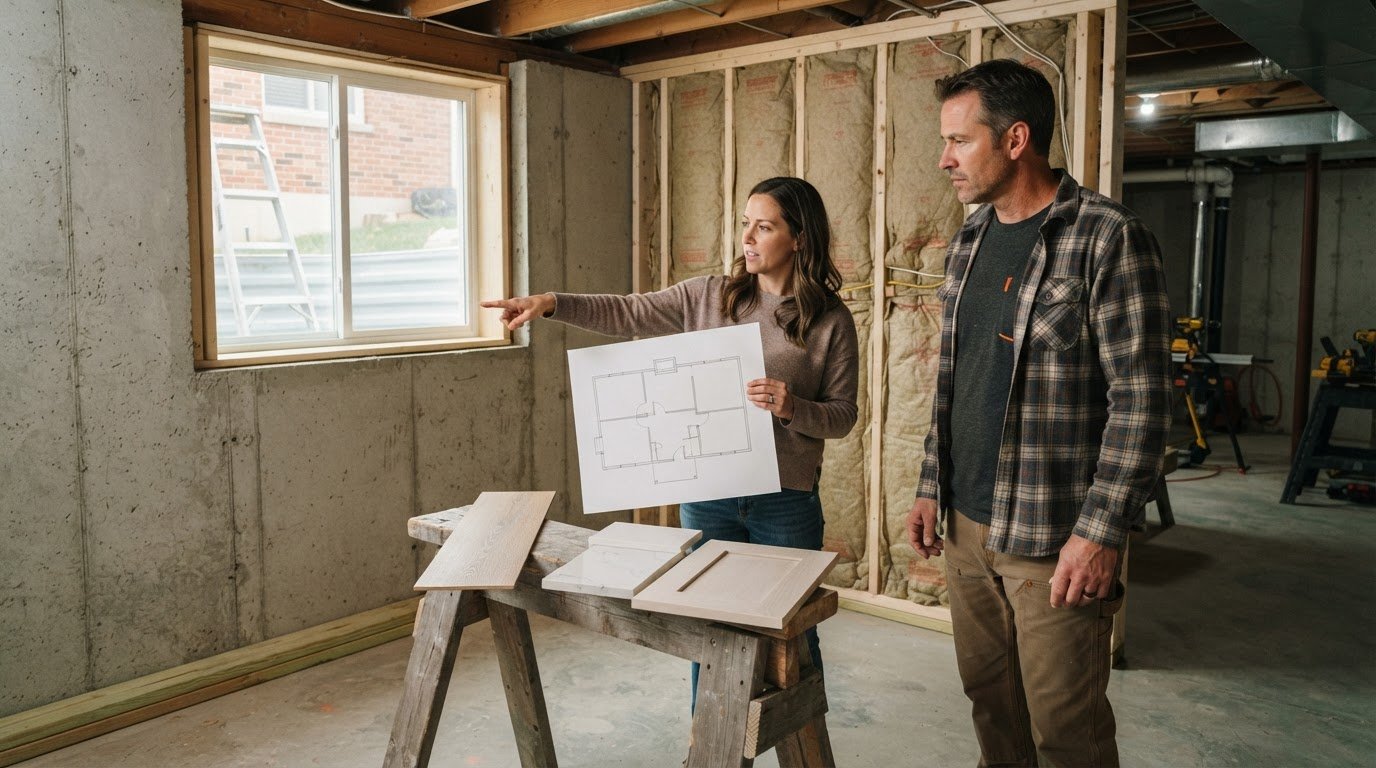
Managing dust during a home renovation starts before demolition. Map the work area, access route, and nearby rooms, then identify dusty tasks such as drywall sanding, tile cutting, and debris removal. Note which rooms will remain occupied and which belongings need protection. These decisions guide barrier placement, material routes, and cleaning between work stages. Assign responsibility for maintaining barriers, checking air cleaners, and repairing openings.
Homes built before 1972 may contain lead dust, which shouldn’t be vented outside. The EPA’s Lead Renovation, Repair and Painting Rule requires lead dust to be contained during renovation work. Planning therefore accounts for potential lead dust before older surfaces are disturbed. The containment approach should fit the work area and airflow plan, rather than relying on an open window or uncovered doorway.
Before work begins, professionals coordinate dust controls with the renovation sequence. They can establish a protected route before materials enter and keep it clear as demolition debris leaves. They identify HVAC vents that need protection and plan airflow for dusty tasks. Daily cleanup, barrier inspections, and final cleaning should be part of the work plan, not last-minute additions.
Assign clear responsibility for each control: who maintains the doorway barrier, checks beyond it, and repairs damage. A torn floor covering or loose plastic seam can weaken protection, so crews inspect these areas as work progresses. The plan should also account for electronics, furniture, and surfaces near the work zone. Homeowners can flag items needing special care, and the renovation team can include them in the protection sequence.
A practical plan for managing dust during a home renovation also explains how to respond if containment fails. If dust appears outside the work zone, crews pause the dusty task, locate the opening, and restore the barrier before continuing. Decide on boundaries, airflow, protection, and responsibilities before work starts. That shared plan should guide each renovation phase and final cleanup.
Strother Built Construction
Strother Built Construction helps homeowners plan residential renovations around the finished space and work sequence. If dust containment is a concern, raise it when discussing your project scope, room use, and protection needs. These details can inform a kitchen, bathroom, or basement remodel, with architectural design services supporting broader project decisions.
Reach out when you’re considering a renovation and want to discuss how the work may affect nearby rooms and household routines. Setting priorities early makes it easier to align the renovation plan with your home and the changes you want to make.
Contact Strother Built Construction to discuss your renovation plans.
Plan a smoother path to your finished space
Dust planning can shape how a renovation fits into everyday life, including which rooms stay accessible and how belongings are protected. Share those priorities early, before the work sequence is set. This gives the renovation team a clearer picture of your home, routines, and goals.
Strother Built Construction offers kitchen, bathroom, and basement remodeling tailored to homeowners’ needs. If you’re considering one of these projects, discuss your goals and dust-control concerns during planning. A clear scope connects the renovation work with the practical details of living through it.
Thoughtful planning is a useful first step in managing dust during a home renovation. Contact Strother Built Construction to talk about your project and the space you hope to create. A comfortable, renewed home can begin with a clear conversation.
Frequently Asked Questions
How Long Does Renovation Dust Last?
Airborne renovation dust typically settles within 48 hours after work stops, but that doesn’t mean every surface stays clean. Fine residue can continue appearing during the first two weeks, while dust lodged in ducts, carpets, or upholstery may resurface for weeks. A room can look finished while hidden dust remains in soft furnishings or air pathways, so cleanup may need attention beyond the final workday.
How often do professionals clean during a home renovation?
Professionals vacuum the renovation work area twice a week during the project and clear dust and debris at the end of workdays. The schedule also responds to dusty tasks: sanding or demolition can leave more residue than a quieter phase. At project completion, crews clean the work area again, including floors and exposed surfaces, then address any dust that appears afterward.
How do professionals seal off a room to contain renovation dust?
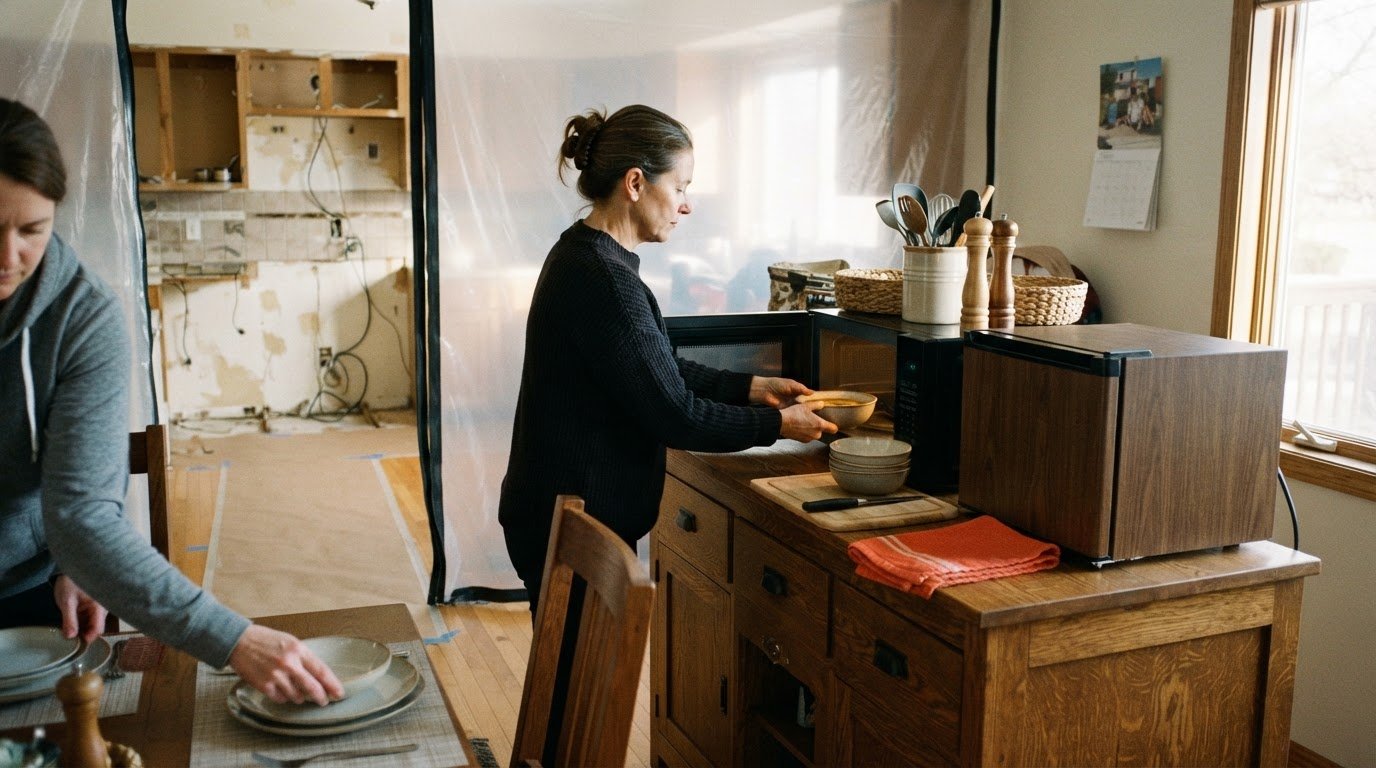
Professionals isolate the work zone by covering doorways and other openings with plastic sheeting and sealing the edges. A designated entryway helps limit dust carried between the room and the rest of the home. When negative pressure is needed, a fan exhausts air from the contained area, while sealed openings help direct replacement air toward the work zone and limit dust escaping.
What dust barriers and materials do professionals use for home renovations?
Professionals use heavy-duty polyethylene plastic to cover openings and floors, sealing seams with tape to reduce gaps. Choose floor protection based on the surface: carpet may need a protective layer that can be repaired if punctured, while hardwood may need rigid panels over plastic. Doorway barriers and protective coverings can also separate the renovation route from adjacent rooms.
How do HEPA air scrubbers and vacuums control construction dust?
HEPA vacuums collect settled debris from floors and surfaces, while air scrubbers pull dusty air through filters. These tools work at different points: a vacuum removes deposits, and an air scrubber treats particles still circulating in the work area. An H13-or-higher HEPA filter captures 99.97% of particles at 0.3 microns, according to the U.S. Environmental Protection Agency.
How often do professionals clean or replace renovation dust barriers and filters?
Professionals inspect barriers as work progresses and repair tears or loose seams when they find them. If the home’s HVAC system must run, its filter is replaced weekly during renovation work, then changed again after the project. Air-scrubber filters usually must be changed every 20 minutes. The crew also checks filters for dust buildup, since a loaded filter can restrict airflow.
Comments