


Vetting Local Home Improvement Contractors in Iowa: The 2026 Essential Checklist

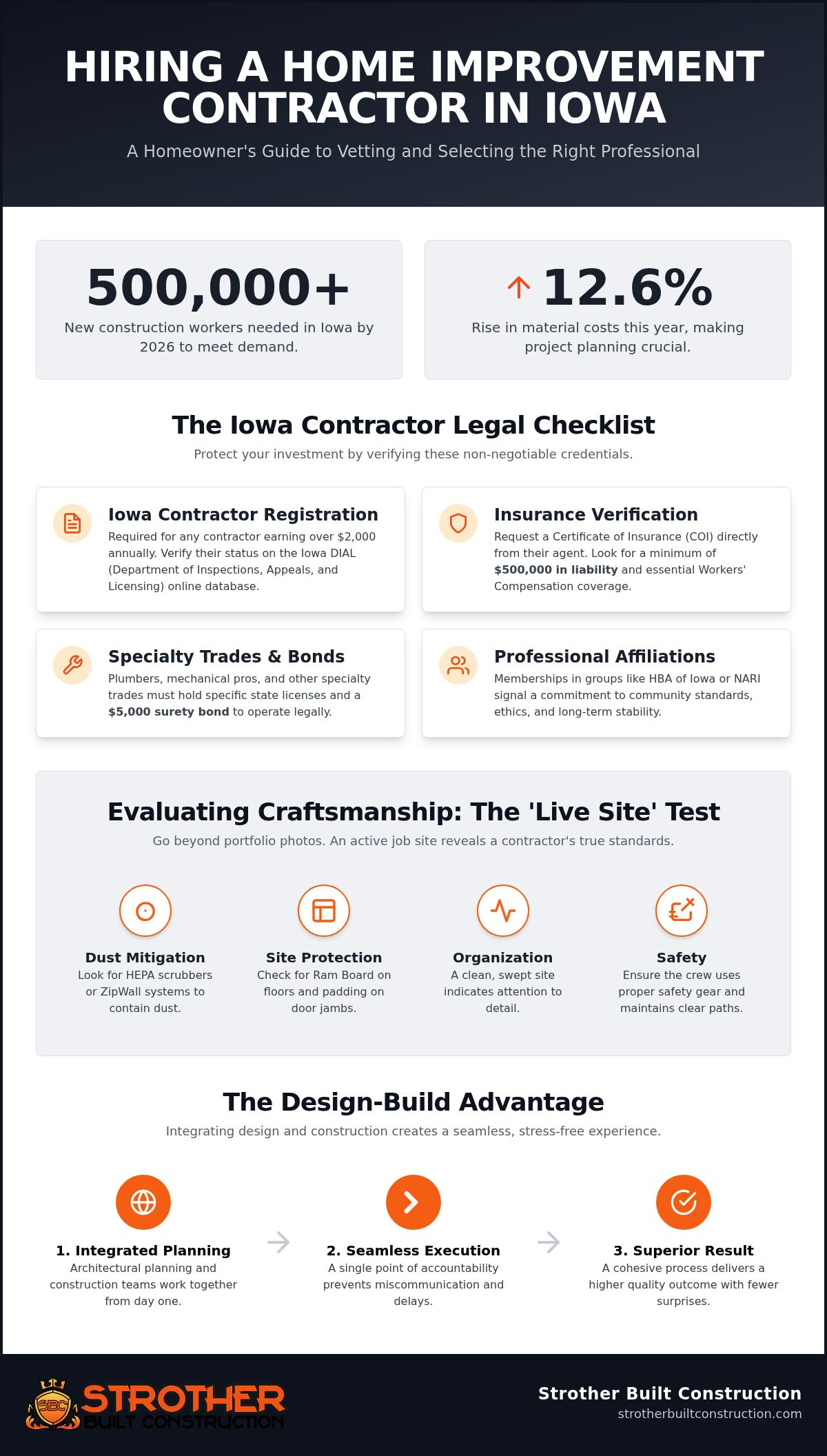
Did you know that Iowa's construction industry needs to recruit over 500,000 new workers in 2026 just to keep up with demand? With labor shortages and a 12.6% rise in material costs this year, finding reliable local home improvement contractors iowa residents can trust has never felt more urgent. It's frustrating to sift through conflicting online reviews while worrying about project delays or licensing red tape that could put your home at risk.
We believe your home deserves a renovation process that is as steady and transparent as the final result. You're looking for a partner who values your vision as much as you do. This article provides a comprehensive, step-by-step framework to help you verify credentials and identify the right remodeling expert for your project. We'll cover the specific 2026 Iowa registration requirements, insurance must-haves, and the red flags that separate the master craftsmen from the amateurs. By the end of this guide, you'll have the tools to hire with absolute certainty.
Table of Contents
Vetting Credentials: The Iowa Contractor Legal Checklist
Protect your investment by verifying the legal standing of any professional before they step onto your property. Hiring local home improvement contractors iowa residents can rely on starts with a deep dive into their administrative credentials. In Iowa, any contractor earning $2,000 or more annually must register with the state. This process is managed by the Iowa Department of Inspections, Appeals, and Licensing (DIAL). Understanding what a general contractor does involves more than just managing a timeline; it means ensuring every legal box is checked to protect your home's value.
Verifying the Iowa Contractor Registration
Visit the DIAL online database to search for a contractor's current status. A valid registration number shows they've paid their $50 annual fee and maintain a valid Iowa unemployment insurance number. Don't mistake registration for a guarantee of craftsmanship. It's a baseline legal requirement, not a competency license. While general contractors register administratively, specialty trades like plumbing and mechanical professionals must hold specific licenses. These trades also require a $5,000 surety bond to operate legally in the state.
Insurance Requirements for Central Iowa Homeowners
Don't accept a verbal "I'm covered" as proof of protection. Request a Certificate of Insurance (COI) sent directly from the insurance agent to your inbox. This prevents you from seeing an expired or forged document. In Iowa, specialty contractors are required to carry a minimum of $500,000 in public liability insurance. You should also confirm they carry workers' compensation if they have even one employee. If an uninsured worker is injured on your property, you could be held liable for their medical expenses and lost wages. It's a massive financial risk that "full coverage" claims don't always address.
Beyond state requirements, check for municipal-specific rules in cities like Des Moines, Ankeny, or Waukee. Polk County has distinct permitting processes that your contractor must handle. Look for professional affiliations such as the Home Builders Association of Iowa or NARI (National Association of the Remodeling Industry). These memberships show a commitment to local community standards and ethical business practices. A contractor who invests in these organizations is often more stable and accountable than one working out of a truck with no local ties.
Evaluating Craftsmanship: Beyond the Portfolio Photos
A glossy photo portfolio is a great starting point, but it rarely tells the whole story of a project's integrity. To truly vet local home improvement contractors iowa, you need to see how their work stands up to our specific climate. Central Iowa's extreme temperature swings and high humidity levels put immense stress on building materials. A beautiful basement remodel in Ankeny is only successful if the moisture control systems are still bone-dry five years later. Ask potential contractors to show you projects that have weathered at least three Iowa winters to ensure their craftsmanship is more than just skin deep.
The 'Live Site' Test: What to Look For
Request a brief visit to an active, work-in-progress job site. This is the most transparent way to see how a crew operates when the cameras aren't rolling. High-end remodeling isn't just about the final tile placement; it's about the daily respect shown to your home. When you visit a site in Waukee or Des Moines, look for these specific signs of a professional team:
Dust Mitigation: Are they using HEPA scrubbers or ZipWall systems to protect the rest of the house?
Site Protection: Do you see Ram Board on the floors and padded covers on the door jambs?
Organization: Is the site swept daily, or is debris piling up in corners?
Safety: Is the crew wearing appropriate gear and maintaining a clear path through the workspace?
An organized job site almost always correlates with a high-quality finished product. If a contractor is careless with your hardwood floors during demolition, they'll likely be careless with the plumbing behind your new shower walls.
Local References and Community Reputation
Online reviews with anonymous stars don't carry much weight in the remodeling world. You need real neighborhood feedback. Ask for at least three references from clients whose projects were completed over three years ago. This timeline reveals the contractor's "after-service" support. Did they come back to fix a popped nail or a sticking cabinet door? A contractor who maintains long-term relationships with homeowners in the Des Moines metro area is a partner you can trust. If you're looking for a team that prioritizes this level of long-term craftsmanship and local accountability, focus on firms that have been rooted in the community for over a decade.
Consistency is the final hallmark of a master craftsman. Whether they are working on a mid-century ranch in Beaverdale or a modern new build in West Des Moines, the quality of the joinery and finishes should be identical. Look for a steady hand and a clear design language across their entire body of work.
The Design-Build Advantage: Why Integrated Services Matter
Choosing the right business model for your renovation is just as vital as picking the right finishes. Most homeowners begin their search for local home improvement contractors iowa by looking for someone to execute a pre-made plan. This is the traditional general contractor model. While it can work for small repairs, major transformations benefit from a design-build approach. This model integrates architectural design, interior styling, and construction into a single, unified team. It replaces the fragmented process of hiring separate entities with a streamlined partnership that prioritizes your vision and your budget from day one.
Architectural and Interior Design Integration
When a designer sits at the same table as the lead builder, structural surprises virtually disappear. They already know where the load-bearing walls sit and how the plumbing stacks in your specific Des Moines neighborhood before the first sledgehammer swings. This collaboration ensures aesthetic continuity throughout your project. If you're planning a home addition, the goal is to make the new space feel like a natural extension of the original structure rather than an afterthought. Having an integrated team allows for a holistic view of the home's flow and function. You can explore the specific benefits of this model in our guide on Architectural Design Services Des Moines: The Design-Build Advantage.
Budget Realism in the Design Phase
Traditional architects often design for beauty without a real-time pulse on current construction costs. In 2026, with material prices and labor availability shifting frequently, this gap can lead to significant financial stress. Design-build firms provide real-world cost estimates while the drawings are still in progress. This prevents the common heartbreak of falling in love with a "dream plan" that eventually proves too expensive to build.
Integrated services also end the blame game. In a traditional setup, a builder might blame a designer's impractical plan for a delay, while the designer blames the builder's execution. With a design-build firm, there's a single point of accountability. This structure creates a more efficient planning phase and a smoother transition into construction. You'll spend less time mediating between professionals and more time watching your home transform. It's about creating a stress-free path to a high-quality result through local expertise and clear communication.
Project Management: The Communication and Timeline Checklist
A successful renovation depends as much on organized management as it does on skilled carpentry. When you interview local home improvement contractors iowa residents often overlook the administrative side of the job. Ask potential partners about the specific software they use to track progress. Professional firms utilize platforms like Buildertrend or CoConstruct to centralize photos, schedules, and budget tracking. These tools ensure you aren't left wondering about the status of your tile delivery or the next inspection. Establish your communication rhythm before the first hammer swings. Decide if you prefer a quick daily text update or a formal weekly meeting to review the upcoming milestones.
Managing Expectations and Timelines
Iowa's climate presents unique challenges that can disrupt even the tightest schedules. A sudden April blizzard or a week of torrential June rain can stall exterior work or material deliveries. Seasoned local pros build "weather buffers" into their timelines to account for these shifts. Demand a detailed, written project schedule that outlines every phase of the work. This roadmap helps you prepare for high-impact days, such as when the water must be shut off or when a crew needs full access to your driveway. For a comprehensive look at navigating these logistics, see our Home Remodeling in Des Moines: The Complete 2026 Buying Guide.
The Change Order Process
Unexpected issues often hide behind the walls of older homes in neighborhoods like Beaverdale or Sherman Hill. You might discover outdated plumbing or structural rot that wasn't visible during the initial walkthrough. A professional firm handles these surprises through a formal change order process. This is a written document that details the scope of the new work, the exact cost, and how it affects the final deadline. Never allow work to proceed on a verbal agreement. Clear documentation protects your budget and ensures transparency, preventing "hidden costs" from appearing on your final invoice.
Confirm who will be your dedicated project lead on-site. With construction permits in the Des Moines metro rising 18% in the first quarter of 2026, many companies are stretched thin. You need to know that a consistent supervisor is overseeing the quality of the work daily. If you're looking for a team that prioritizes organized project management and daily accountability, we're here to lead the way. A steady hand and a clear plan make all the difference in turning a complex renovation into a rewarding experience.
Finalizing Your Choice: The Local Partnership Checklist
The final step in your vetting process is a "gut check" regarding the personal fit. You aren't just hiring a company; you're inviting a team into your home for three to six months. Remodeling is an intimate, high-stakes process that requires mutual respect and clear boundaries. If a contractor seems dismissive during the consultation or fails to listen to your specific concerns about your daily routine, those issues will only magnify once the walls are opened. Trust your instincts. Choose local home improvement contractors iowa families feel comfortable with, as this partnership determines the quality of your daily life during the transformation.
Local Accountability in Central Iowa
National franchises often treat homeowners as data points in a larger corporate machine. In contrast, a locally owned and operated firm relies entirely on its reputation within the Des Moines metro area. When a business owner lives in the same community as their clients, there is a higher level of accountability for long-term warranty work and service calls. Strother Built Construction has maintained a 13-year commitment to Central Iowa, rooted in the belief that our work should stand as a testament to our craftsmanship for decades. We don't just finish a project and disappear. We stay connected to ensure your kitchen or basement continues to serve your family perfectly. This local presence means we understand the specific structural challenges of homes in neighborhoods like Waukee or Ankeny better than any out-of-state provider ever could.
The Final Contract Review
Before you sign on the dotted line, ensure the contract is a shield, not just a formality. A professional agreement must include a clear payment schedule tied to specific milestones rather than arbitrary dates. For example, a payment might be due upon the completion of framing or the installation of cabinetry. This keeps the financial momentum aligned with the physical progress of the work. You should also look for definitions of "substantial completion" versus the "final walkthrough." Substantial completion means you can use the space for its intended purpose, while the final walkthrough is your chance to identify any minor "punch list" items that need a finishing touch.
Confirm that the contract explicitly mentions the permanent local office and the dedicated crew that will be on your site. This prevents your project from being "subbed out" to unknown parties you haven't vetted. Transparency in the paperwork is the hallmark of a reliable partner. If you're ready to start your renovation journey, reach out to a team that values your vision as much as you do. Consult with Strother Built Construction for your Des Moines project and experience the difference of a true local partnership.
Build Your Future with a Trusted Iowa Partner
Your home is more than just a construction site; it's the foundation for your family's future. Finding the right local home improvement contractors iowa residents can rely on requires looking past the surface to verify legal registrations and real-world craftsmanship. Remember that a truly successful renovation depends on integrated design-build expertise and a management plan that accounts for our unique local climate. By following this 2026 checklist, you ensure your investment is protected by local accountability and professional standards.
Strother Built Construction is locally owned and operated by Josh Strother. We bring over 13 years of high-end Iowa remodeling experience to every project we touch. From integrated architectural design to the final interior finishes; we handle every detail so you don't have to. We take immense pride in our heritage as a Des Moines partner and our commitment to the long-term value of your home. It's time to turn your vision into a reality with a team that values quality as much as you do.
Start Your Stress-Free Renovation with Strother Built Construction. Let's create a space you'll love for years to come.
Frequently Asked Questions
What licenses are required for home improvement contractors in Iowa?
Iowa doesn't have a statewide general contractor competency license. Instead, any professional earning over $2,000 annually must register with the Iowa Department of Inspections, Appeals, and Licensing (DIAL). This administrative registration requires a $50 fee and proof of unemployment insurance. Specialty trades like plumbing or electrical work require specific competency licenses and a $5,000 surety bond. Always verify a professional's current registration status through the state's online database before signing a contract.
Do I need a permit for a basement remodel in Polk County?
Yes, most basement finishing projects in Polk County require a building permit. This ensures your renovation meets safety codes for egress windows, electrical wiring, and plumbing. Cities like Ankeny and Waukee have specific municipal codes that might differ slightly from county standards. Your contractor should handle the application process and schedule necessary inspections. Skipping permits can lead to legal issues or complications when you eventually try to sell your Des Moines area home.
How do I check a contractor's references effectively?
Effective reference checking goes beyond a simple phone call. Ask for three references from projects completed at least three years ago to see how their work holds up over time. Inquire about the contractor's communication style and how they handled unexpected delays. If possible, visit a current job site to observe their organization and cleanliness. Real feedback from neighbors in West Des Moines or Grimes is far more valuable than anonymous online reviews.
What is the difference between a general contractor and a design-build firm in Iowa?
A general contractor typically executes a set of plans provided by an outside architect. In contrast, a design-build firm like Strother Built Construction integrates architectural design and construction into a single, unified team. This model eliminates finger-pointing between designers and builders. It also ensures that project costs stay aligned with your budget from the very beginning. Choosing a design-build partner streamlines the entire process for complex kitchen or bathroom remodeling projects in the Des Moines metro.
How much of a down payment should I give a contractor in Iowa?
Iowa law doesn't set a specific limit on down payments, but industry standards usually fall between 10% and 33% of the total project cost. Avoid any professional who demands a massive upfront payment before work begins. A fair schedule ties payments to specific milestones, like framing or plumbing rough-ins. This keeps the financial risk balanced for both the homeowner and the local home improvement contractors iowa residents hire.
What should be included in a home remodeling contract?
A professional contract must include a detailed scope of work, a clear payment schedule, and an estimated timeline for completion. It should also outline the process for change orders when unexpected structural issues arise. Ensure the document specifies the exact materials to be used and includes proof of general liability and workers' compensation insurance. A well-written contract acts as a roadmap for your project, protecting your investment and setting clear expectations for both parties.
How do I handle a dispute with a local home improvement contractor?
Start by reviewing your contract and discussing the issue directly with the project lead. Clear communication often resolves misunderstandings before they escalate. If the dispute remains, you can file a formal complaint with the Iowa Department of Inspections, Appeals, and Licensing (DIAL). For significant financial disagreements, consulting with a local attorney who understands Iowa's construction laws is a wise step. Maintaining a written log of all communications and photos of the work will support your case.
Why is a local contractor better than a national renovation company?
Local contractors offer a level of accountability and community investment that national franchises can't match. They understand the specific soil conditions and climate challenges unique to Central Iowa, from basement moisture to extreme temperature shifts. A locally owned firm like Strother Built Construction uses established local crews rather than rotating subcontractors. This connection to cities like Altoona ensures you receive personalized service from local home improvement contractors iowa families have trusted for years.


Comments